Cambelt or timing chain? The VW Transporter and van owner's guide
3 June 2026Engine & Mechanical
Cambelt or Timing Chain? The UK Van Owner's Complete Reference
(and why your pre-2010 T5 2.5TDI has neither)
You've just bought the van. The keys are warm in your hand, you've not even got it home yet, and someone — a mate, your dad, a bloke on a forum — asks the question: "When was the cambelt last done?"
And you have absolutely no idea. Worse, you're not even sure the thing has one.
Here's the reassuring part: that confusion is completely justified. VW's Transporter range, across its various generations, has shipped engines with cambelts, engines with timing chains, and — this is the one that catches everyone — engines with neither, driven by a gear train. The right answer genuinely depends on your engine code and the year. So before you panic, or before you pay a garage to "check the cambelt" on an engine that doesn't have one, let's sort out exactly what you're dealing with.
Belt vs chain vs gear drive — the quick version
All three do the same job: keep the top of the engine (the valves) spinning in time with the bottom (the pistons). They just do it differently.
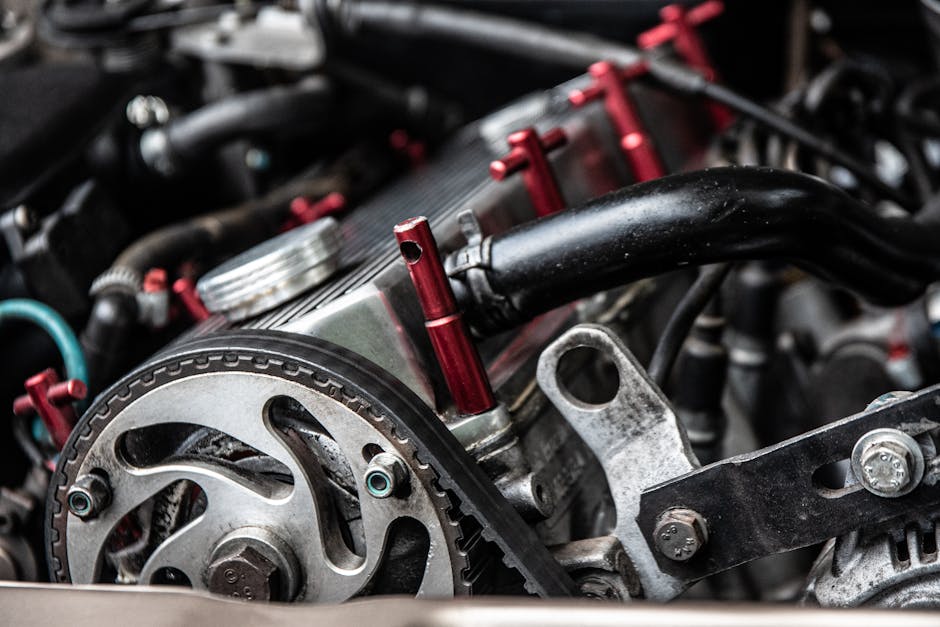
A cambelt (timing belt) is a toothed rubber belt. Rubber perishes, so it degrades with both age and mileage — which is why it has a fixed replacement schedule, usually quoted as a mileage figure or a number of years, whichever comes first. Miss it at your peril.
A timing chain is a metal chain running in oil. It's designed to last the life of the engine and has no scheduled replacement, though chains can stretch over high mileage and a worn tensioner can let one rattle or jump.
A gear drive uses meshed gears — no belt, no chain. Effectively maintenance-free for timing purposes, though there can be other wear items attached to it.
Now the bit that keeps people awake. Most of these are interference engines, meaning the valves and pistons share the same space at different moments. If a cambelt snaps, the camshaft stops but the pistons keep hammering up — straight into open valves. The result is bent valves, smashed pistons, and often a cracked head. You're looking at a £1,500–£4,000+ rebuild if it's salvageable, and scrap value if it isn't. A £400 belt change is cheap insurance against that. This isn't scaremongering; it's just what happens.
The engine reference table — T4, T5, T6
Find your engine code (it's on the service paperwork, or stamped on the block) and read across.
VW T4 (1990–2003)
| Engine | Code | Drive | Interval |
|---|---|---|---|
| 1.9TD | ABL | Cambelt | ~60,000 mi / 4 yrs |
| 2.4D | AAB | Cambelt | ~60,000 mi / 4 yrs |
| 2.5TDI | ACV, AXG, AXL, AYY | Cambelt | ~80,000 mi / 4 yrs |
Every T4 diesel is cambelt-driven. Petrol variants differ, but they're rare in the UK. The T4 is old now, so service history is often patchy — assume it's due unless you have proof otherwise.
VW T5 (2003–2015)
| Engine | Code | Drive | Interval |
|---|---|---|---|
| 2.5TDI (pre-2010) | AXD, AXE, BNZ, BPC | GEAR DRIVEN | No belt/chain — see below |
| 2.0TDI (post-2010) | CAAB, CAAC, CFCA, CFJA | Cambelt | ~140,000 mi / 4 yrs |
| 2.0 TSI (petrol) | — | Timing chain | None scheduled |
The pre-2010 T5 2.5TDI is the great misunderstanding of the van world. It has no cambelt. It has no timing chain. It is gear driven, and that gear train is built to outlast everything around it. So when a well-meaning garage tells you to "get the cambelt checked" on a 2007 2.5TDI, you can smile politely and keep your wallet shut — there's nothing there to check.
What this engine does have is a freewheel/elastic drive coupling (the unit driving the oil and vacuum pumps off the gear train), which can wear out and is worth inspecting around 100,000 miles. That's the genuine service item people are vaguely remembering when they say "cambelt." It isn't one.
VW T6 / T6.1 (2015–present)
| Engine | Code | Drive | Interval |
|---|---|---|---|
| 2.0TDI (all) | various | Cambelt | ~140,000 mi / 4 yrs |
All T6 and T6.1 diesels run a cambelt. Confirm the exact interval against the current VW schedule, as T6.1 spec can differ slightly from early T6. Some variants also carry an internal balance shaft chain — that's not a routine service item, so don't let it confuse the cambelt question.
Mercedes Sprinter
The common diesels — OM651 (2.1) and OM642 (3.0 V6) — use timing chains, not belts. There's no scheduled change. Be aware that chain stretch is a known weak point on higher-mileage OM651s; a rattle on cold start is the classic warning sign, and worth investigating rather than ignoring.
Ford Transit
| Engine | Drive | Notes |
|---|---|---|
| 2.2 TDCi (pre-2016) | Cambelt | Conventional interval |
| 2.0 EcoBlue (2016+) | Wet belt | Runs in oil — see below |
The 2.0 EcoBlue uses a wet timing belt — a belt that runs submerged in engine oil. It doesn't follow a traditional mileage interval, but it has its own failure mode: the belt can break down, shed material, and contaminate the oil system, sometimes without warning. Keeping to strict oil-change intervals with the correct spec oil matters more on these engines than almost anything else. Treat it as its own category, not a normal cambelt.
How to verify the history
For anything that does have a belt, you want proof it's been changed:

- Service book: look for a stamped entry with the date and mileage of the belt change.
- Engine bay sticker: garages often leave a little sticker on the slam panel or cam cover noting the date/mileage and next due figure.
- Age + mileage check: if both are at or past the interval, assume it's overdue regardless of what the book says. Belts perish even on low-mileage vans.
- Ask the seller, plainly: "Has the cambelt been done, and have you got the paperwork?" If the answer is vague, price a fresh belt into the deal — you'll likely be paying for it shortly anyway.
Cost in the UK
Indicative fitted prices at a competent independent (not a main dealer):
- T4 cambelt: £250–£450
- T5 2.0TDI — full kit (belt, water pump, tensioners): £400–£700. Always do the water pump at the same time; it's belt-driven and the labour's already paid for, so doing it separately later is money thrown away.
- T6 cambelt: £500–£800 — access is tighter, hence the jump.
DIY: the T4 and T5 are within reach of a competent home mechanic with the correct locking tools, and there are good forum walkthroughs for both. The T6 is fiddlier and best left to someone who's done a few.
Decision summary
- Find your engine code.
- Look it up in the table above.
- If it's gear driven (pre-2010 2.5TDI), relax — but keep an eye on that drive coupling near 100k.
- If it's chain driven, there's no scheduled change — just listen for rattles.
- If it's belt driven, check your history against the interval. No history, and at or past the mileage or the age limit? Book it. The belt is cheap. The engine is not.
Photos: Hebert Santos · Gustavo Fring